Venture debt for web3 projects, written as smart contracts.
MZF Protocol lends USDC to web3 projects against milestones. Lenders pool capital in a master vault or back a single deal directly, and the contracts handle funding, releases, repayments and a set plan for loans that go wrong.
Projects need capital before their token. Lenders need protection.
Web3 teams often need funding before they have revenue or a token to sell, and equity rounds dilute them. Lenders who would fund them want the protections of venture debt: milestones, covenants, warrants and a clear path when a borrower falls behind.
On-chain credit has a mixed record, mostly because defaults were handled by hand and late. MZF writes the whole life of a loan into contracts, from the proposal to the workout, so lenders can see in advance exactly what happens to their money in each case.
How a loan moves through the protocol
Every step below is a contract call. Off-chain due diligence feeds the decision; the money only moves on-chain.
Propose with a stake
Whoever proposes a deal stakes $MZF, sized by the loan. A committee approves it, or it goes live by itself after a challenge window. The stake is held for the life of the loan.
Fund the sub-vault
Each deal gets its own sub-vault. Direct lenders lock USDC and receive a transferable receipt; the master vault tops up the rest within its per-deal and buffer limits.
Release and repay
USDC goes to the borrower milestone by milestone. Repayments pay interest first, then principal and fees, split pro rata between direct lenders and the master vault.
Close or work out
A repaid loan returns the proposer's stake. A loan in trouble enters the workout protocol below, and if lenders lose money the stake is slashed and paid to them.
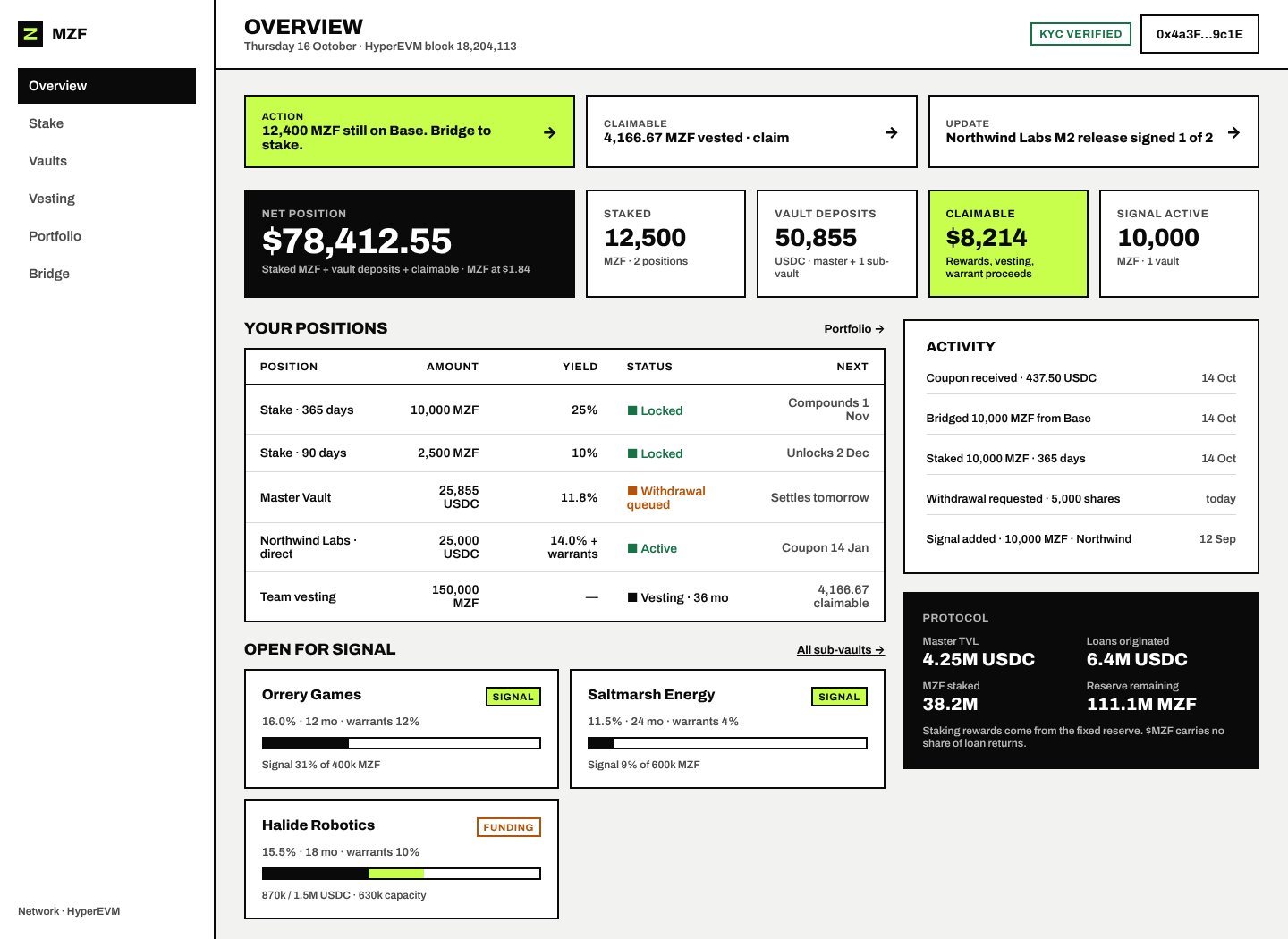
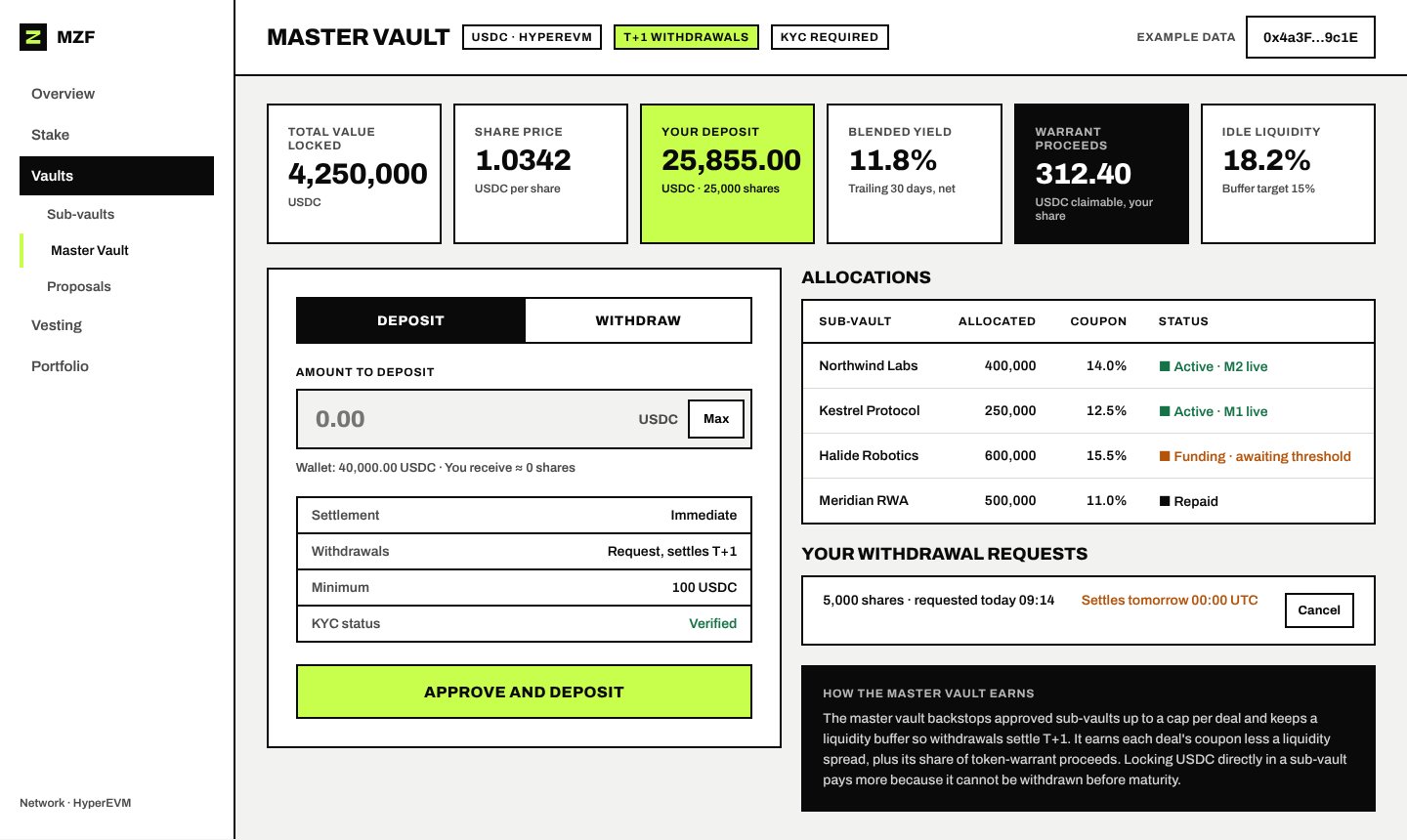
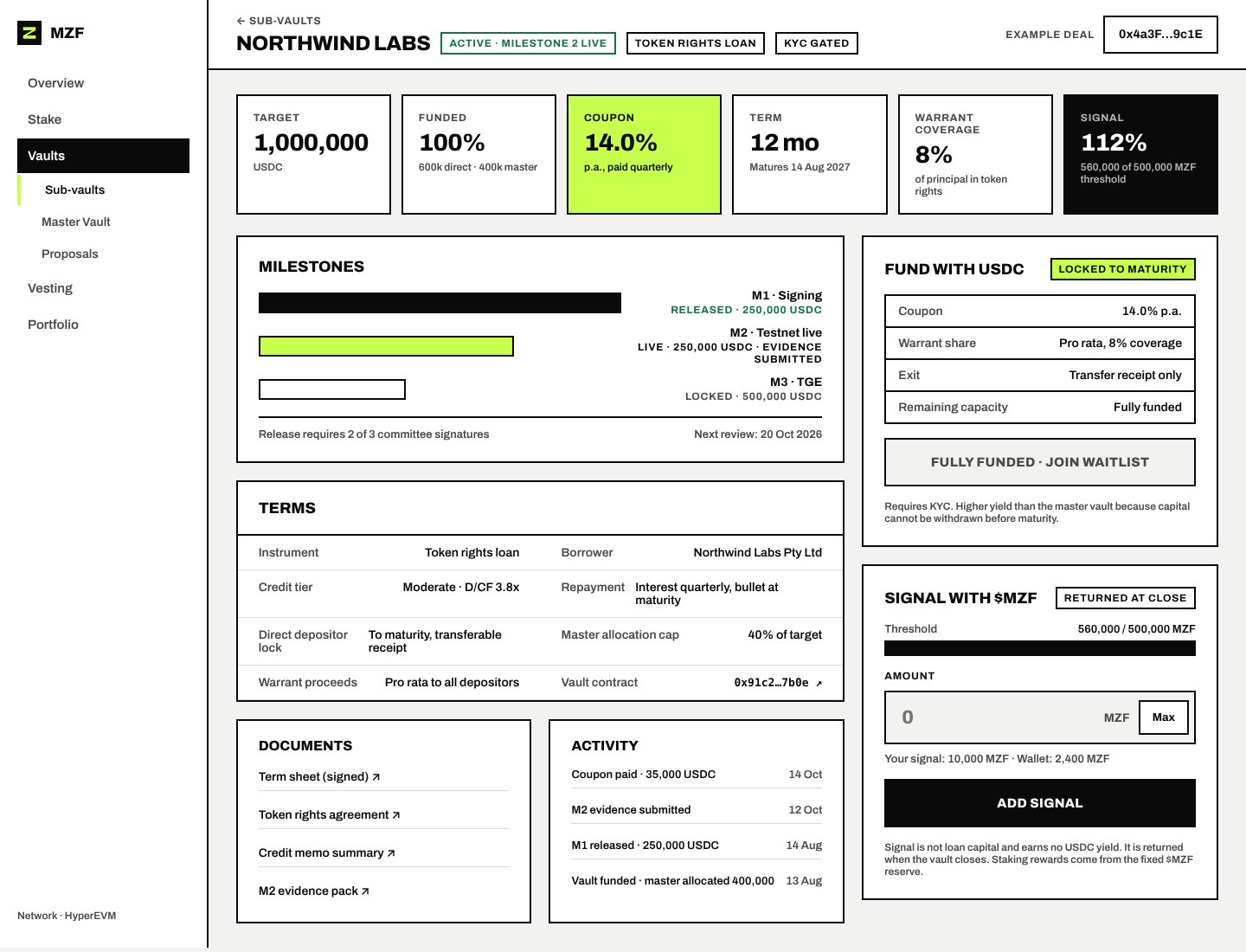
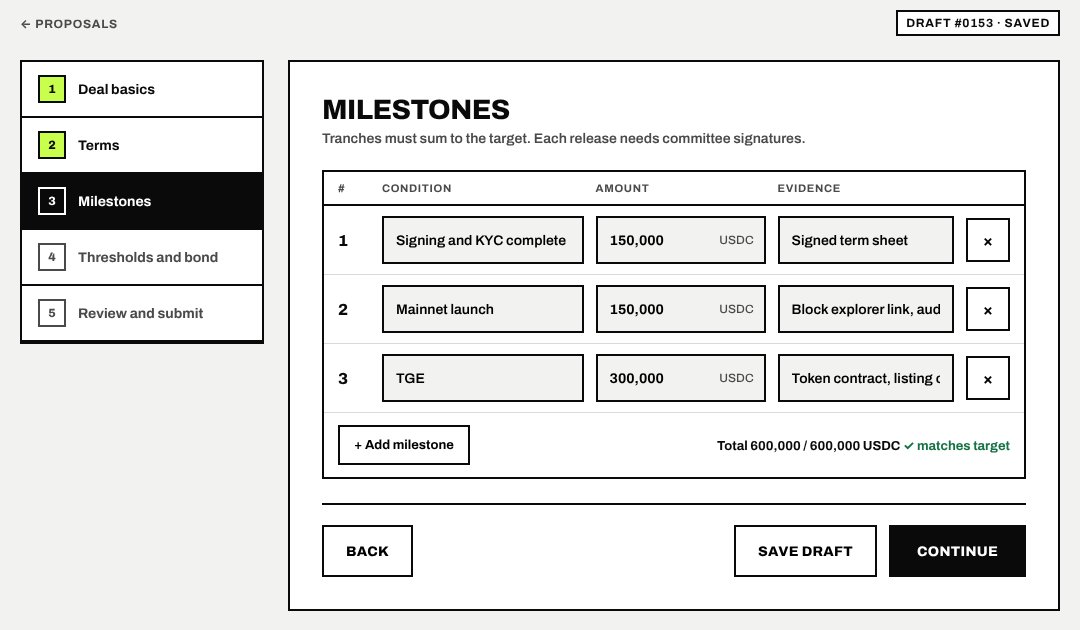
Designed screen by screen, desktop and mobile
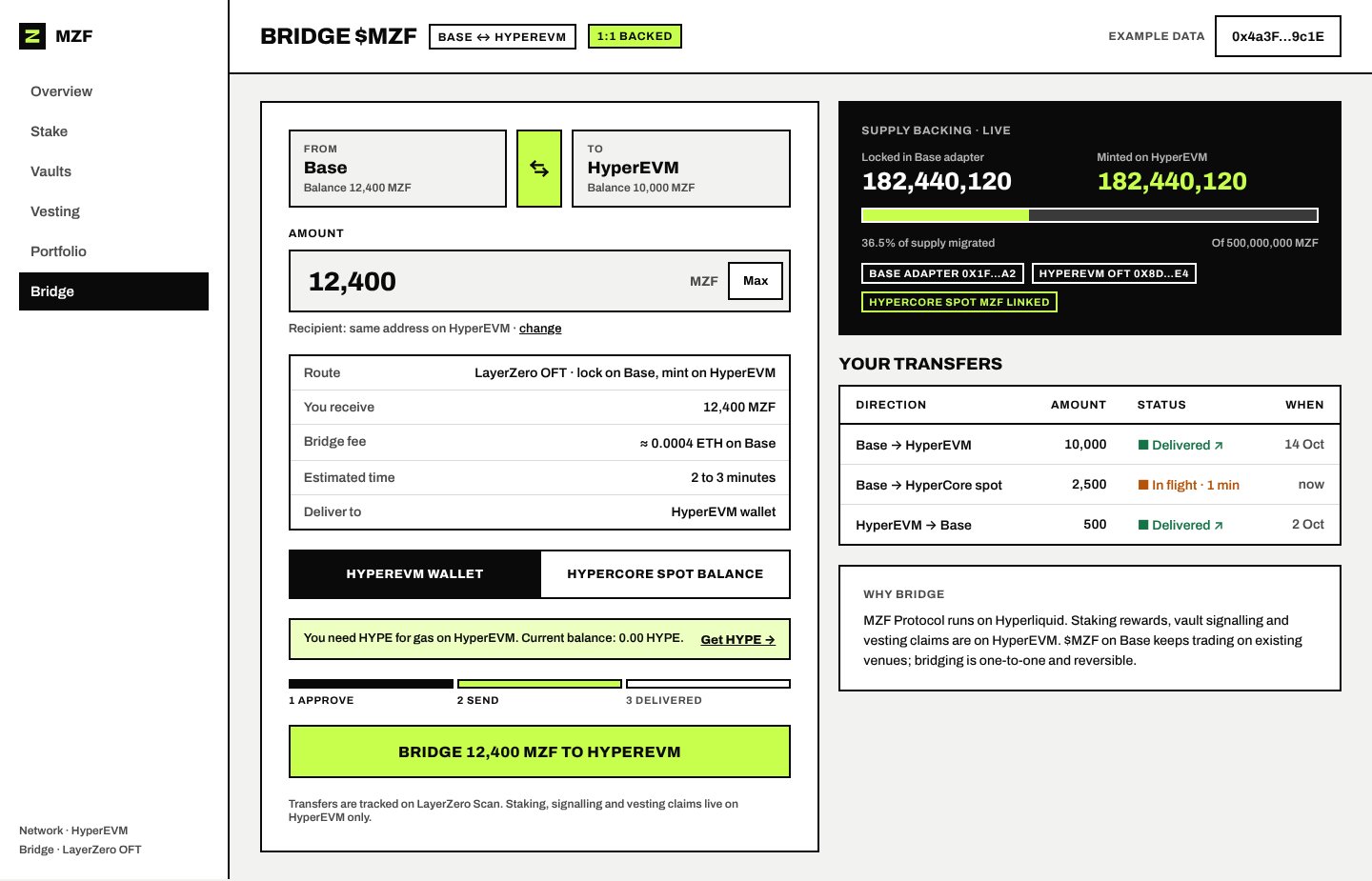
We designed about 50 screens before writing the app, then built them on the contracts. These are from the design canvas, with example data.
A workout protocol on timers
Each loan carries a payment schedule. Anyone can advance its stage once a deadline passes, so nobody has to decide when a borrower is in trouble.
Built to be audited
The contracts have had an internal security review and are being prepared for an external audit. They are not deployed yet.
- ERC-4626 master vault with a share offset against inflation attacks
- Sub-vaults, factory and proposal registry
- Workout, resolver, auction and rescue modules
- Staking, vesting, treasury and reserve pool
- LayerZero bridge pair
- Every upgrade and role change goes through a 48-hour timelock
- Separate roles for payments, treasury, compliance and pausing
- KYC allowlist on deposits and transfers
- Rolling spend caps on the treasury and reserve
- 218 unit, fuzz and invariant tests in Foundry
- Invariants such as "the contract always holds what it owes"
- A full-protocol integration test run under the real timelock
- CI on every push
- Next.js 15 site and dApp on wagmi and viem
- A due diligence desk: document uploads, a 300-item risk register and AI-assisted analysis, with scoring done in code
The same skills, applied to your build
Lending and investment products
Pooled and direct funding, tranches, interest waterfalls, fees and redemption queues.
Investor and client portals
Positions, claims, documents and onboarding, designed for desktop and mobile together.
Compliance-aware design
Allowlists, role separation, timelocked changes and spend caps built in from the first contract.
Security and audit readiness
Fuzz and invariant testing, internal review and an audit-prep list before code goes to auditors.
Building something that moves money?
Tell us what you're building and we'll come back with how we'd approach it.